Showing posts with label Extinct Animals. Show all posts

Monday, June 20, 2011

Great Auk: Amazing Extinct Animals Species

Great Auk Skeleton PhotosGreat Auk Skeleton Photos

The great auk is the only species in the genus pinguinus, flightless giant auks from the Atlantic, to survive, until recently, but today have become extinct. It is also known as Garefowl, or penguins.

Great Auk BirdGreat Auk Bird

Great Auk With PenguinGreat Auk With Penguin

Stands about 75 cm or 30-34 inches tall and weighs about 5 kilograms, the flightless Great Auk is the largest of the auks. It has white, glossy black feathers.

Great Auk EggGreat Auk Egg

Great Auk HabitatGreat Auk Habitat

In the past, the Great Auk found in a large number of islands off eastern Canada, Greenland, Iceland, Norway, Ireland and the UK, but it was eventually hunted to extinction. Shell midden sites found Floridan show that at least occasionally, birds such as the recent winter adventure in the far south of the 14th century.

Sunday, June 12, 2011

Cave Lion: The Most Huge Extinct Animal in The World

The cave lion, also known as European or Eurasian cave lion, is an extinct subspecies of lion known from fossils and a wide variety of prehistoric art. This is a subspecies of the biggest lion. An adult male, which is found in 1985 near Siegsdorf (Germany), has a shoulder height of about 1.2 meters and 2.1 meters in length without tail, is about the same size is a very big modern lion. This is even more than the male specimens of other subspecies. Therefore, the cat may have been greater than 5-10% of the modern lion. It apparently became extinct about 10,000 years ago, during the Wurm glaciation, although there are some recent signs that it may have existed as recently as 2000 years ago, in the Balkans.

Cave Lion Extinct Animal SpeciesCave Lion Extinct Animal Species

Pictures of Cave Lion SkeletonPictures of Cave Lion Skeleton

Images of Cave Lion FossilImages of Cave Lion Fossil

Cave Lion HabitatCave Lion Habitat

Cave Lion HuntingCave Lion Hunting

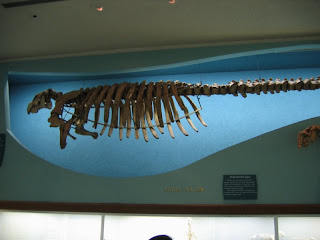
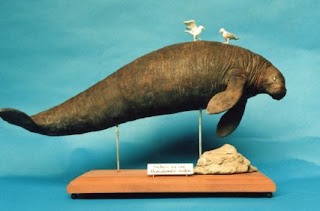
Steller's Sea Cow: Great Extinct Animal Species

Pictures of Steller's Sea Cow SkeletonPictures of Steller's Sea Cow Skeleton

Previously found in the Bering Sea off the coast of Asia, it was discovered in 1741 by the naturalist Georg Steller, who is traveling with the explorer Vitus Bering.

Giant Steller's Sea CowGiant Steller's Sea Cow

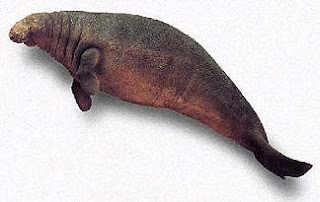
Sea cow grew 7.9 meters (25.9 ft) long, weighing 3 tons. It looks a bit like a large seal, but there are two stout forelimbs and a whale like tail. According to Steller, Animals never come out on the shore, but always live in water.

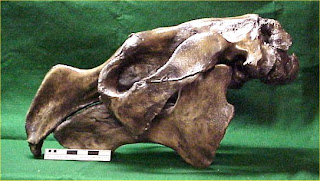
Images of Steller's Sea Cow FossilImages of Steller's Sea Cow Fossil

Its skin is black, thick, like the old oak bark, a small proportion of head and body, it does not have teeth, but only two Bones of one or more units, the other less.

Steller's Sea Cow SpeciesSteller's Sea Cow Species

Steller's Sea Cow Being HuntedSteller's Sea Cow Being Hunted

This is moderate, according to Steller. Fossils show that Steller's Sea Cow was formerly widespread along the North Pacific coast, reaching south to Japan and California. As the speed and the last time the population was eliminated, is likely to be the arrival of humans in the region caused the extinction of this animal.

Wednesday, June 1, 2011

Caspian Tiger: The Most Remarkable Extinct Animal in The World

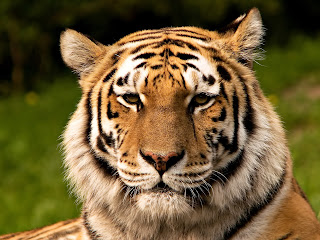
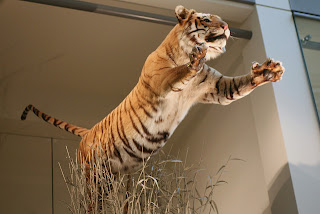
Caspian Tiger: The body of this subspecies was quite stocky and elongated with strong legs, big wide paws and unusually large claws. The ears were short and small, and gave the appearance of being without hair on the tips. Around the cheeks the Caspian tiger was generously furred and the rest of its fur was long and thick. The colouration resembled that of the Bengal tiger. Male Caspian tigers were very large and weighed 169-240 kg. Females were not as large, weighing 85-135 kg. There are still occasional claims of the Caspian tiger being sighted. The Caspian tiger or Persian tiger was the westernmost subspecies of tiger, found in Iran, Iraq, Afghanistan, Turkey, Mongolia, Kazakhstan, Caucasus, Tajikistan, Turkmenistan and Uzbekistan until it apparently became extinct in the 1970s. Of all the tigers known to the world, the Caspian tiger was the third largest.

Caspian Tiger HeadCaspian Tiger Head

Amazing Caspian TigerAmazing Caspian Tiger

Great Caspian TigerGreat Caspian Tiger

Caspian Tiger Extinct Animal SpeciesCaspian Tiger Extinct Animal Species

Caspian Tiger HabitatCaspian Tiger Habitat

Tyrannosaurus Rex: Most Amazing Extinct Animal in The World

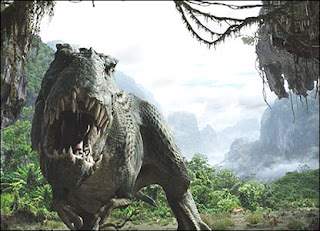
Tyrannosaurus rex was one of the largest land carnivores of all time, measuring up to 43.3 feet long, and 16.6 ft tall, with an estimated mass that goes up to 7 tons.
Fossils of Tyrannosaurus rex have been found in North American rock formations dating to the last three million years of the Cretaceous Period at the end of the Maastrichtian stage, approximately 68.5 to 65.5 million years ago.

Tyrannosaurus Rex HabitatTyrannosaurus Rex Habitat

Tyrannosaurus Rex FossilTyrannosaurus Rex Fossil

Giant Tyrannosaurus RexGiant Tyrannosaurus Rex

Tyrannosaurus Rex HeadTyrannosaurus Rex Head

Tyrannosaurus Rex Extinct Animals SpeciesTyrannosaurus Rex Extinct Animals Species

Thursday, March 3, 2011

Chalicothere Extinct Animal Pictures

Chalicothere Extinct Animal SpeciesChalicothere Extinct Animal Species

Photos of Extinct Animal Chalicothere Photos of Extinct Animal Chalicothere

Pictures of Chalicothere in The ForestPictures of Chalicothere in The Forest

Images of Chalicothere Extinct Animal Fossil Images of Chalicothere Extinct Animal Fossil

Chalicothere Extinct AnimalChalicothere Extinct Animal

Monday, February 7, 2011

Aurochs Extinct Animal

The Aurochs..the ancestor of domestic cattle, was a type of huge wild cattle which inhabited Europe, Asia and North Africa, but is now extinct; it survived in Europe until 1627. The aurochs was far larger than most modern domestic cattle with a shoulder height of 2 metres (6.6 ft) and weighing 1,000 kilograms (2,200 lb). The aurochs was regarded as a challenging quarry animal, contributing to its extinction. The last recorded aurochs, a female, died in 1627 in the Jaktorów Forest, Poland, and its skull is now the property of Livrustkammaren in Stockholm.

Aurochs Extinct Animal SpeciesAurochs Extinct Animal Species

Aurochs Extinct Animal  FossilAurochs Extinct Animal Fossil

Aurochs Extinct Animal PicturesAurochs Extinct Animal Pictures

Aurochs Extinct Animal PhotosAurochs Extinct Animal Photos

Sunday, November 7, 2010

Dodo Birds Extinct Animals Species

Dodo Bird Pictures Dodo Bird Pictures

Instead of just one, there are two? As with both forementioned brands, do we now market these vehicle as having multiple horns? And, to remind you that the horn is on the Range Rover Sport, they not only protrude from the steering wheel, but are bright and shiny to help you see them, when needed.

Dodo Bird FossilDodo Bird Fossil

Or, take Land Rover who on the 2010 Sport has the horn looking like two brilliantly positioned cylinders, likened to the size of Virginia Slims -- for those of you that remember and may have had an inhale or two. Truth be told, that's a child's thumb size.

Dodo Bird PhotosDodo Bird Photos

On the Cadillac's, it's the size of an oval thumb strategically placed in symmetrical positions. The headlights are still, if not more, annoyingly glaring, yet the horn on many new models is all but transformed into something entirely unknown to most new car buyers. The turn signal is as loud as ever. As technology, design and connectivity advance in our industry, what, pray tell, has happened to the horn?

Dodo Bird Wallpapers Dodo Bird Wallpapers

What happened? Now, I need my 'readers' to locate the horn, for goodness sake. But its size is reduced by enormous real estate and its' form is no longer recognizable. The horn is now placed, still, as it always was, on the steering wheel. Nonetheless, I am so disturbed by what is transpiring in the industry with the iconic horn, I am getting dramatic.

Dodo Bird Extinct Animals PicturesDodo Bird Extinct Animals Pictures

Well not entirely, yet. Ever so subtly and with no fanfare or warning, the horn - the automobile drivers' ability to sound itself-is disappearing.

Friday, November 5, 2010

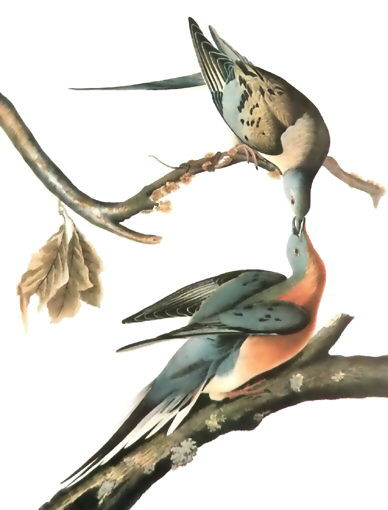
Extinct Passenger Pigeon Species

Extinct Passenger Pigeon PhotosExtinct Passenger Pigeon Photos

Like Pigeons feed on seeds, fruits and plants. Pigeons lay one or two eggs at a time and both the parents participate in caring the young ones which leave the nest after 7 to 28 days after their birth. Pigeons prefer to make their nests with the help of sticks and other debris which may be placed on the trees, ground and on the spaces of buildings depending upon the species.

Extinct Passenger Pigeon PicturesExtinct Passenger Pigeon Pictures

The common species of pigeon generally available in the localities is the feral Rock Pigeon. Pigeons possess stout bodies with short necks, having slender bills and fleshy cere. The young pigeons are called as squabs. Columbidae is present throughout the world but the major species are present in the Indomalaya and Australasia ecozones.

Extinct Passenger Pigeon WallpapersExtinct Passenger Pigeon Wallpapers

In general speaking the doves and pigeons are used together for describing any of the birds. There are about 300 species of passerines are known. Pigeons and doves are responsible for comprising the family Columbidae with the order Columbiformes. Its family is Columbidae. Pigeon belongs to the phylum Chordata and class Aves.

Extinct Passenger Pigeon Images Extinct Passenger Pigeon Images

Pigeon is one such bird which is not only beautiful in its look but is also a symbol of peace. They are cosmopolitan and are also beneficial to the human beings in a number of ways. Birds have a number of adaptations that enable them to survive in different types of habitats.

Extinct Passenger Pigeon SpeciesExtinct Passenger Pigeon Species

They fly in the air, have brighten colours that attract us towards them and they produce varieties of sounds that make our environment beautiful. Birds are a source of amusement for us.

Thursday, November 4, 2010

Coelacanth Fish Extinct Animals

Coelacanth Fish Extinc Animals SpeciesCoelacanth Fish Extinct Animals Species

The However, it is the distinctive, fleshy paired fins that are characteristic of this particular member of the Sarcopterygii. The term Coelacanth means "Hollow Spines" a reference to the arrangement of hollow spines to be found in the fins.

Coelacanth Fish PicturesCoelacanth Fish Pictures

Although, the two extant (still living today, as opposed to extinct), species are entirely marine, fossils of Coelacanths have been found associated with ancient river systems and lakes indicating that some of this widespread group of fishes lived in freshwater environments as well as marine habitats.

Coelacanth Fish Photos Coelacanth Fish Photos

The fossil record of Coelacanths shows that these Sarcopterygians (lobe-finned or fleshy finned fishes) were a highly successful and diverse group of fishes throughout the Palaeozoic and the Mesozoic. Unfortunately, as a result of over fishing, specimen hunting and the destruction of the Coelacanth's unique habitat at least one of the species known to science is now in danger of extinction.

Coelacanth Fish Extinct AnimalsCoelacanth Fish Extinct Animals

In fact, we know that there are at least two species living today. In what became known as the "scientific sensation of the age", and much to the surprise of palaeontologists, it was soon to become clear that representatives of the Coelacanthiformes Order had survived to the present day. However, the discovery of a living Coelacanth specimen in late December 1938 changed our view.

Coelacanth Fish WallpapersCoelacanth Fish Wallpapers

Scientists had thought that this once diverse and widespread group of fishes died out with the dinosaurs. Coelacanth fossils have been found in rock strata dating from the Mid Devonian (approximately 370 million years ago) to sedimentary rock laid down at the end of the Cretaceous (65 million years ago).

Tuesday, November 2, 2010

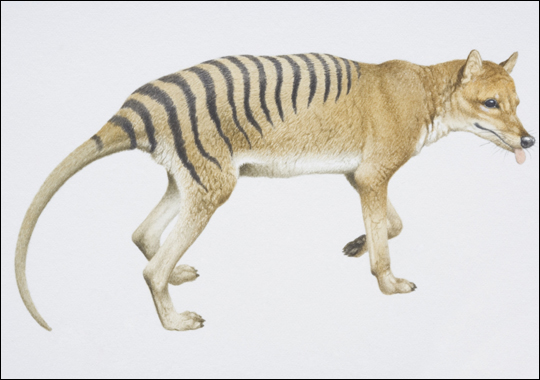
Tasmanian Tiger Recently Extinct Animals

Tasmanian Tiger Recently Extinct Animals SpeciesTasmanian Tiger Recently Extinct Animals Species

Unfortunately, coming into contact with Although they were commonly associated with tigers due to their stripes, the animals were more closely related to the Tasmanian devil. The animals were shy and they did not want anything to do with humans. During the hunt, they had a distinctive terrier like yap. They only made sounds when they were anxious.

Tasmanian Tiger PicturesTasmanian Tiger Pictures

The animals had a husky bark, though they were almost always mute. Their tail was stiffer and thicker towards the base of it. They stood about two feet high from the shoulders. At full height, the animals would grow to be as large as six feet from their nose to the end of the tail. It had a stiff tail and a large head for its body size.

Tasmanian Tiger PhotosTasmanian Tiger Photos

The Tasmanian tiger looked like a large dog which featured a long body with stripes running from side to side on it. The first record of the Tasmania tiger coming into contact with humans was with the indigenous people who lived in Australia, dating back to at least 1000 BC. There has been fossil evidence found that dates the animals back to the beginning of the Miocene era. The animals appeared about four million years ago.

Tasmanian Tiger WallpapersTasmanian Tiger Wallpapers

These animals which are thought to be extinct once lived throughout Australia, Tasmania and in New Guinea. The animal was the largest marsupial to consume meat, before it was declared an extinct species in 1936. The Tasmanian Tiger, sometimes called the Tasmanian Wolf or even the Tassie Tiger is officially known as the Thylacine, Thylacinu cynocephalus in Latin.
Related Posts Plugin for WordPress, Blogger...